May 2022

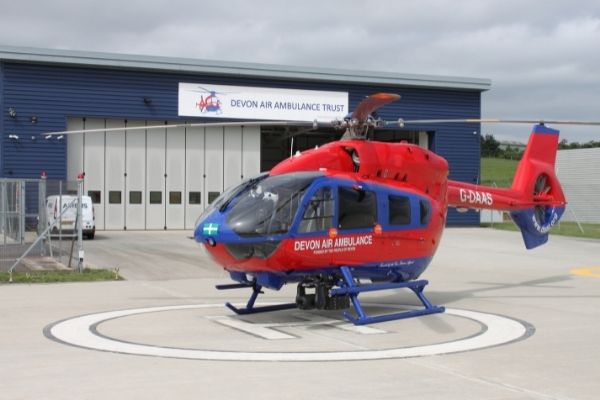
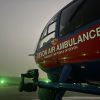
H145 aircraft at Exeter Airbase

Injured women half as likely as men to be treated with life-saving drug

By Clinical

New study highlights urgent need to improve equity in trauma care.

Injured women are half as likely as men to receive the life-saving drug tranexamic acid (TXA) even though the treatment is equally effective regardless of sex, according to new research in the British Journal of Anaesthesia.

The study was conducted by a team from the London School of Hygiene & Tropical Medicine and University Hospitals Plymouth NHS Trust, which included Critical Care Doctors Tim Nutbeam and Lauren Weekes. Devon Air Ambulance clinicians often collaborate with many others in the field, which is beneficial not only to the broader clinical community, but also to the collective knowledge and awareness of the crew, ultimately supporting patients.

In this two-part investigation, the team initially re-analysed data from two large randomised trials involving over 20,000 adult trauma victims, whose original findings showed that TXA can save the lives of tens of thousands of accident victims worldwide. They found the drug is equally effective in male and female patients and reduces the risk of death by up to 30%.

They next looked at data from 216,000 injured patients included on the Trauma Audit Research Network (TARN) database for England and Wales to see if injured women were being treated to the same extent. The researchers found that compared with men, injured women were half as likely to get TXA, both in and outside of the hospital setting. The discrepancy in treatment occurred even where women have the same risk of death from bleeding as men. The gap in administration was greatest in older patients and those with a lower risk of death from blood loss.

Professor Ian Roberts from the London School of Hygiene & Tropical Medicine and study author, said:

“These results are very concerning. TXA is the only proven lifesaving treatment for traumatic bleeding. Women were treated less frequently than men regardless of their risk of death from bleeding or the severity of their injuries. This looks like sex discrimination, and there is an urgent need to reduce this disparity in TXA treatment so all patients who need the drug have the chance to receive it.”

Tranexamic acid is a safe and established treatment for bleeding. Current UK guidance for its administration states it should be given where there is “known or suspected severe traumatic haemorrhage” and the injury has occurred within the previous three hours. It is also administered to patients with certain types of head injury.

Professor Tim Nutbeam from University Hospitals Plymouth NHS Trust and study author, said:

“These results are striking but sadly not surprising. It is already known that women with chest pain are less likely to receive aspirin, less likely to be resuscitated for out of hospital cardiac arrest, and less likely to be taken to hospital by an ambulance using lights and sirens.

“Although we have shown large sex differences in TXA treatment, we can only speculate about the underlying causes. Clinicians in the UK must be provided with clearer treatment guidance so that we can help reduce this bias. If all patients were treated according to need, we could save 160 lives per year in the UK.”

Dr Lauren Weekes from University Hospitals Plymouth NHS Trust and study author, said:

“There is a vast data gap in the medical literature when it comes to health outcomes for women. By sex-disaggregating data from the CRASH trials and the TARN database our study has contributed to a body of knowledge concerning women’s health. The next step is to work towards redressing the inequitable administration of this lifesaving medication.”

The authors acknowledge limitations of the study include missing data for some of the variables used to calculate the risk of death due to bleeding, although the percentage of missing data was similar for men and women. There is also potential for inaccuracy in predictions of the risk of death from bleeding, despite studies showing the method used has high reliability.

The next steps are for further research to establish awareness of this specific issue in critical care and encourage other analysis of gender/sex bias in access to and delivery of health care to ensure evidence-based delivery of treatments, and that policies and triage tools do not discriminate. It will also be necessary to investigate the specific bias.

Darren Goodwin, Operations Manager at Devon Air Ambulance said:

“We very much value the work clinicians like Tim and Lauren undertake in partnership with University Hospitals Plymouth NHS Trust. An important aspect of our work as clinicians is to drive change and innovation in the sector, not only at a local level, but globally and for the benefit of all patients. We always seek to enhance our culture of learning, training, and the sharing of insights that ultimately influence practice and help to save more lives.”

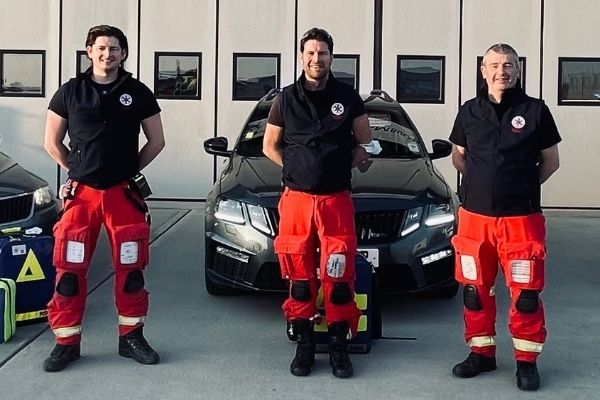
three of our volunteer responders

Paramedics donate free time to save lives

By Clinical, Operations

Helicopter Emergency Medical Service (HEMS) dispatchers can now draw upon support of Devon Air Ambulance’s Volunteer Responder Scheme 

three of our volunteer responders

Josh, Lee and Darren, Specialist Paramedics in Critical Care who are volunteering on the scheme

Devon Air Ambulance Advanced Paramedics in Critical Care not only dedicate their work to bringing advanced care to patients in time-critical situations, but they are now donating their own free time to the cause too. 

The Devon Air Ambulance Volunteer Responder Scheme (VRS) is a new initiative where three of Devon Air Ambulance’s Specialist and Advanced Paramedics in Critical Care are volunteering to support core emergency services across Devon.  

These three emergency responders are about to begin a twelve-month trial to determine the feasibility of introducing a permanent volunteer responder team within the organisation.  

This means that HEMS dispatchers can now draw upon off-duty highly skilled clinicians to be the first responders in an emergency situation that they are close to. 

Enhancing the first response network

Devon is already fortunate enough to have a dedicated network of volunteer emergency doctors who are part of BASICS Devon.  

Like Devon Air Ambulance, BASICS is also a charity that receives no Government funding and relies solely on donations. The BASICS doctors provide immediate access to specialist medical care. They also respond in their own vehicles, anytime, anywhere in Devon and all have undertaken extensive specialist training in the complex and challenging arena of pre-hospital medical care.

Simon Scott-Hayward, Chair of Trustees at BASICS Devon said:  

We’re extremely happy that Devon Air Ambulance has been able to launch their own Volunteer Responder Scheme, this ultimately means that an additional specialist, emergency medical team is ready to respond to the critically-ill or injured across Devon when every second counts. In the past year we have seen an increased demand for our service of 30% so have no doubt that DAA’s volunteer responders will also be kept very busy.

3 volunteer responders with kit and car

Our 3 volunteer crew members with their vehicles

Who are the Volunteer Responders?

Lee Hilton, Darren Goodwin & Josh Barker will attend emergency calls outside of their normal working hours on a completely voluntary basis. They will work closely with Devon Air Ambulance clinicians, South Western Ambulance Service NHS Foundation Trust (SWASFT) colleagues, and other volunteer doctors from the British Association for Immediate Care (BASICS) if they are also attending the incident.  

What can the VRS team deliver?

The team of VRS responders are either qualified Specialist or Advanced Paramedics in Critical Care and will be able to deliver their full scope of practice as they do in their employed role which includes, but is not limited to, advanced airway management, sedation, advanced trauma care procedures and support with complex clinical decision making. The team will support existing enhanced and critical care service in delivering the best available care to our patients in their time of need.   

How will the VRS team respond?

VRS responders will each notify the Helicopter Emergency Medical Service (HEMS) Dispatchers based in the SWASFT control room when they are available to volunteer, which means they could then be contacted by HEMS to respond to an emergency incident in the same way as they currently dispatch the fleet of Devon Air Ambulance’s other emergency vehicles.  

The difference will be that the VRS team will use their own vehicles to respond. This requires the responder to gain appropriate insurance for the purposes of emergency responding, together with ensuring their vehicles are fully serviceable and fit for the purpose of their intended use. Each volunteer responder also needs to be equipped with much of the same lifesaving equipment carried on their usual critical care cars and helicopters. In addition, volunteers need to be able to reach the scene safely and this requires the use of blue lights and sirens.   

How much does it cost?

It costs approximately £5,500 to fully equip one of our volunteers with everything they need. Devon Air Ambulance supporters have enabled the charity to fund this kit. Devon Air Ambulance is one of just a few air ambulances to launch a scheme of this type and plan to report on the life-saving difference they will make to local communities in Devon. 

How do I learn more about the VRS trial?

A detailed service evaluation will run concurrently alongside the trial phase to ensure all important data is captured to maximise the success of the scheme. Headline facts and mission figures will be shared on the daatcl.co.uk website in due course.

We know you will join us in wishing Lee, Darren and Josh well, as they embark on a trial which will further enhance the provision of time-critical care across Devon.

Read more about the scheme 

Devon Air Ambulance VRS car identification

Look out for this logo in our volunteer vehicles