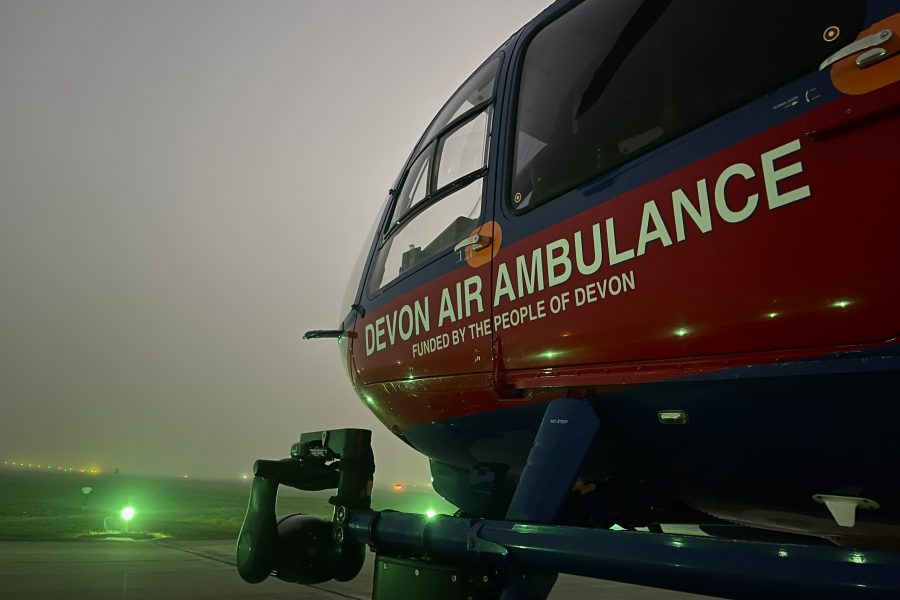
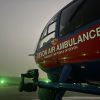
Helicopter in the fog

New rapid transfer service for stroke patients

By Clinical, Operations, Uncategorized

Strokes are the second most common cause of death worldwide.  85% of strokes are caused by a blockage (a clot called a thrombus) in the small blood vessels of the brain, and the remaining 15% occur as a result of a bleed in the brain. Administering emergency clot-busting drugs has been the mainstay treatment for many years but risks further complications. Developments in treating these thrombolytic strokes continue to improve not only survival, but the quality of life for those that do survive.

Some thrombolytic strokes are now treated using a relatively new procedure, similar to that used in the treatment of heart attacks. Removal of the thrombus is undertaken with a guide wire inserted into a large artery in the leg, which travels along blood vessels to reach the target, and the thrombus is removed. This procedure is called Mechanical Thrombectomy Retrieval (MTR) and is performed by specialist Neuro Interventional Radiologists at Plymouth hospital, using x-ray type images to help them carefully navigate the complex network of blood vessels in the brain. The aim is to remove the thrombus, so that normal blood flow can be restored to the part of the brain which has been starved of oxygen.

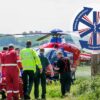
Results for MTR are impressive. In some cases, patients can have severe one-sided paralysis at the start of the procedure and wake up afterwards moving all four limbs normally. Patients suffering this kind of sudden stroke are time critical, and MTR should be performed as quickly as possible as the benefit of MTR drops by 5.7% for every hour of delay. In Devon, the longest transfer time to Plymouth hospital is undertaken by patients being treated at Barnstaple hospital. Between the two hospitals, the road transfers can take up to two hours, but by air, it is only twenty minutes.

Anaesthetist, Anna Ferguson, first approached Devon Air Ambulance with the idea of reducing this transfer time. In partnership with Plymouth and Barnstaple hospitals, Critical Care Paramedic, Nigel Lang, from Devon Air Ambulance, worked with Anna to develop the system which now provides rapid air transfer for these time critical emergencies.

So far, six patients have benefited from this new service, and it is anticipated that numbers will increase as the MTR service expands. MTR is not yet a 24/7 service, however it is hoped this will be achieved within the next few years. MTR is an expensive procedure, however due to reduced hospital stay and social care needs, cost savings can be huge; and the benefit to patients and their families can be even bigger.

The main stroke symptoms can be remembered using the word FAST:

Face – their face, mouth, or an eye may droop on one side, and the person may not be able to smile.

Arms – the person may not be able to lift both arms and keep them there.

Speech – speech may be slurred or garbled; they may not be able to talk; and may have problems understanding what you’re saying.

Time – dial 999 immediately.

Visit the NHS page

About Nigel Lang: Nigel has been with DAA for since 2009, and an operational Advanced Paramedic in Critical Care, as well as the Research Lead Paramedic.

How to identify a stroke infographic

How to identify a stroke infographic

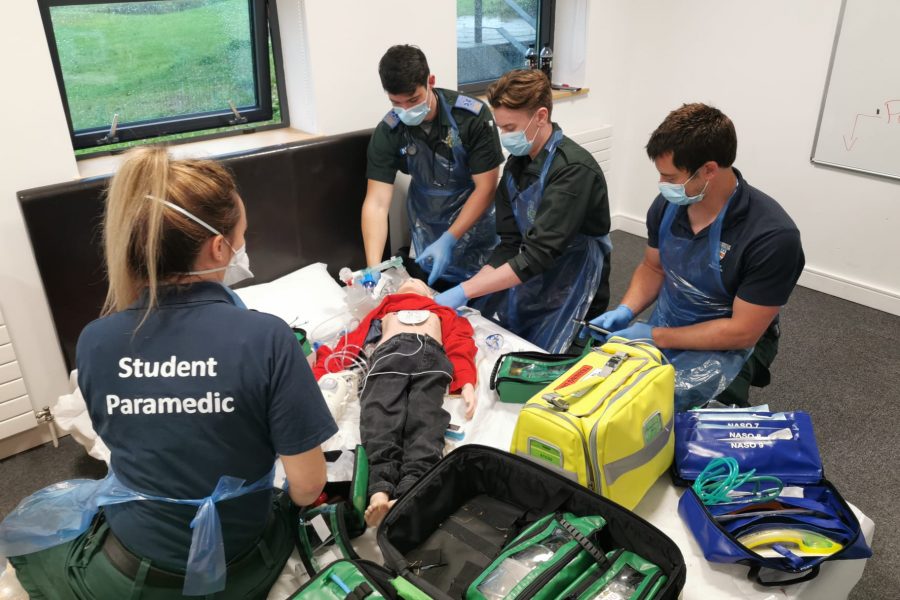
HEMS simulation day

College of paramedics: a paramedic’s insight

By Clinical

Amy-Leigh Shepherd, ParaSoc Chair, shares her insights into a HEMS Simulation Day

Student Paramedic Societies, or ‘ParaSocs’, have a vitally important role in helping to build the confidence and competence of future paramedics. On the 2nd of October 2021, our Paramedic Society (ParaSoc) at Plymouth University co-hosted a simulation training day with Devon Air Ambulance Trust (DAAT). This event had 29 student members attend, working alongside five Critical Care Paramedics, six live actors and a makeup artist to help make the event as realistic as possible.

Before the event, a pre-reading list was available to members, allowing them to familiarise themselves with current guidelines to help maximise learning on the day. The ParaSoc team worked heavily with Joshua Barker from DAAT to create the following scenarios:

  • Post-ROSC following ALS
  • Crush Injury Trauma
  • Major Trauma
  • Paediatric Life-threatening Asthma
  • Traumatic Brain Injury with a Pre-Hospital Emergency Anaesthesia Demonstration

Creating realism within the five scenarios allowed us to challenge our student members, encourage shared decision-making, and highlight the importance of good communication and teamwork within a high-pressured environment. Bringing the simulation to life involved a special effects makeup artist creating realistic injuries such as an open femur fracture and packable wounds using silicone prosthetics.

Additionally, makeup created an impression of diaphoresis, cyanosis, and bruising.

The actors were volunteer first year paramedic students who were briefed on how to act surrounding their presenting complaint and when to deteriorate or improve based on clinical interventions. It provided beneficial insight into the profession for the first years and enhanced the authenticity of the simulation for our ParaSoc members.

Clothes were donated for each scenario to encourage students to remove patients’ clothing as they would during traumatic incidents in front-line placements. ParaSoc supplied the volunteers with red clothing to wear underneath their outfits to simulate “skin level”. All participants were instructed to stop cutting clothes when they saw the red undergarments. By physically performing the task, our members felt more comfortable removing clothing in practice and searching for injuries that may be hidden by clothing. Feedback after the event highlighted that this was a beneficial aspect of the day because students felt removing clothing is often overlooked during simulation with a mannequin but is a necessity when conducting a thorough head to toe assessment in the pre-hospital environment.

The five groups rotated through the stations throughout the day, spending 40 minutes in simulation followed by a 20 minute debrief session. Spending an hour on each station allowed our members to embrace the simulation and practice interventions in real-time. An example of this is when administering medication; students used the plastic catheter of the cannula (with the needle disposed of) and attached it to the patient’s skin with a Tegaderm. They would then break open and draw up a placebo medication, often a glass ampoule containing water, or sweetener in a bottle for hydrocortisone. Administering the medication correctly instead of mimicking the procedure added to the realism as we all know how time-consuming and fiddly that can be in a crowded and loud environment!

Each scenario had a different approach to creating a challenging environment to emphasise the importance of good communication in a time-critical situation. The crush injury trauma was based in a dark man-made cave, where the patient had been trapped by a boulder made of cardboard and expanding foam. Each group had split themselves up to form two crews, and each responding group had one torch. Furthermore, a speaker played loud white noise to mimic the sound of the fire service stabilising the rock face, highlighting the importance of good communication and teamwork within a difficult working location. Establishing good holistic care became important in the paediatric life-threatening asthma scenario where students had to manage a frightful mother and a deteriorating patient. All these scenarios were gratefully received by all who attended, who stated it was a challenging but fantastic learning day.

Upon reflection, while the many benefits of this event outweigh the challenges we faced on the day, it is worthy to note that we would reduce the number of scenarios to help prevent fatigue for future events. Nevertheless, the length of each simulation felt realistic to front line placement and the 20 minute debrief afterwards was essential to solidifying learning and clarifying any questions. Our HEMS collaboration day has highlighted how we can get innovative with our ParaSoc CPD events to create a fun learning environment for our fellow students, to help increase their confidence through simulation. We hope that by sharing our experiences of running this event, we can inspire other ParaSocs to create and share their own!

This event would not have been possible without the help of the following people, so a massive thank you again:

  • DAAT Critical Care Paramedics (Joshua Barker, Lee Hilton, Glenn Birtwistle, Neil Spencer and Mark Hawley)
  • ParaSoc Committee (Nathan Evans; Paul Cook and Cara Clemow)
  • Special Effects Makeup Artist (Poppy Shepheard)
  • Live Actors + NQP (Shannon Murphy; Sophie Wills; Steve Griffiths; Katy Hope; Emily Carey; Adele Hontoir and Ashley Bowers)

Read the article in the context of the College of paramedics publication

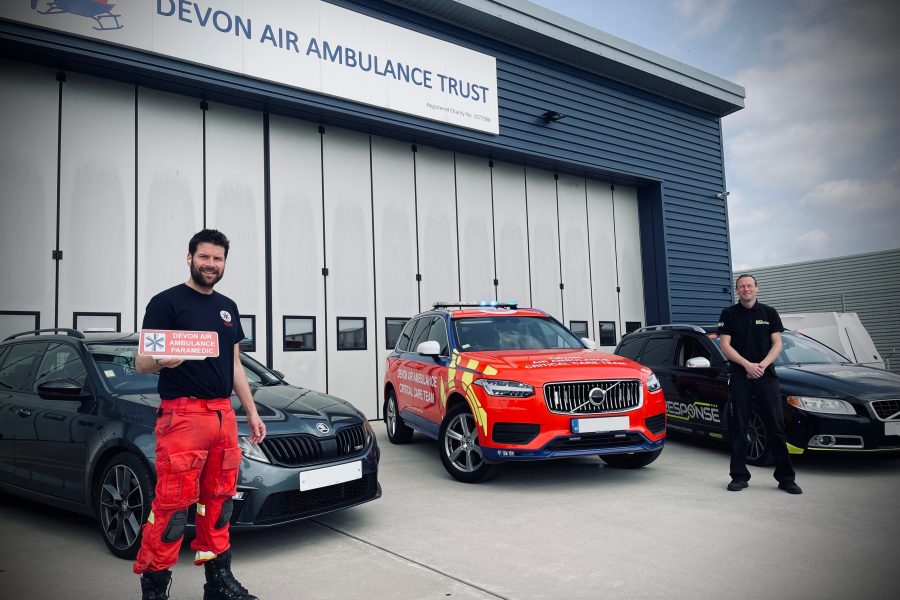
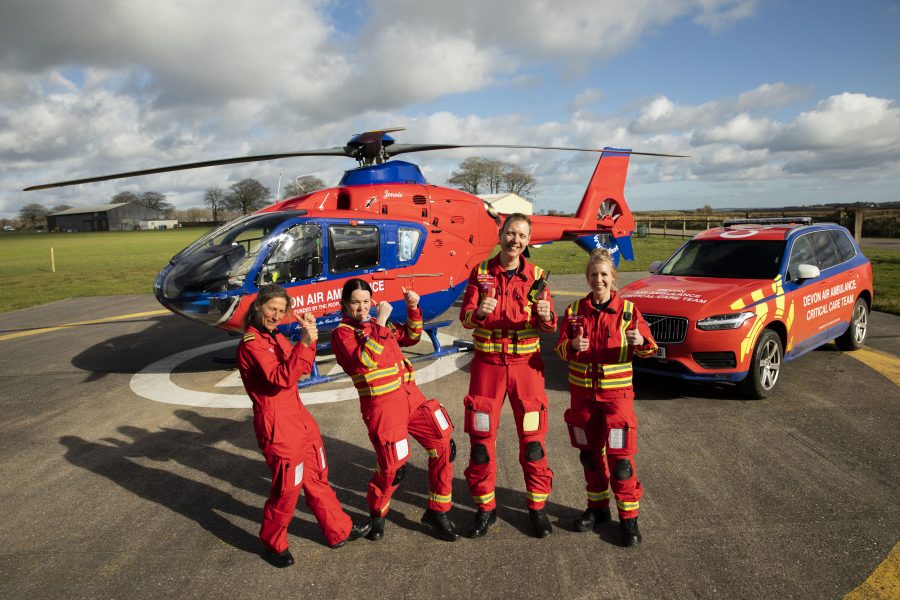
Crew assembled wit aircraft and critical care car

An ‘Outstanding’ reason to celebrate for Devon Air Ambulance

By Uncategorized

Devon Air Ambulance Trading Company Limited has been rated ‘Outstanding’ following an inspection by the Care Quality Commission (CQC) in June this year.

The CQC is the independent regulator of health and social care in England, ensuring safe, effective, compassionate, high quality care services to patients. By monitoring, inspecting and regulating services across all healthcare organisations, the CQC ensures organisations like Devon Air Ambulance meet the fundamental standards of quality and safety.

In 2019, the operational part of Devon Air Ambulance, the Devon Air Ambulance Trading Company Limited, registered with the CQC and became clinically independent. The Devon Air Ambulance Trading Company’s aim is to develop clinical excellence by constantly raising the bar of their emergency medical service provision to patients through excellence in training and developing clinical expertise, to directly benefit each of their patients.

Due to the pandemic, until recently the CQC have not been able to conduct on-site inspections, but in June this year, they undertook their first ‘Comprehensive’ Inspection of Devon Air Ambulance since their registration 3 years earlier.

The Process

The Care Quality Commission states: ‘There are five questions we ask all care services.  They’re at the heart of the way we regulate, and they help us to make sure we focus on the things that matter to people.’

Five Key Questions

  • Are they safe?  Are patients protected from abuse and avoidable harm?
  • Are they effective? Does the care, treatment and support given, achieve good outcomes, help to maintain quality of life, based on best available evidence?
  • Are they caring? Do the staff involve and treat patients with compassion, kindness, dignity and respect?
  • Are they responsive to people’s needs? Is the organisation organised to meet their patient’s needs?
  • Are they well-led? The leadership, management and governance of the organisation need to make sure it is providing high quality care based around the patient’s individual needs, that they encourage innovation, and that they promote an open and fair culture.

How the Five questions are used within the inspection

Each of the five key questions are broken down into ‘key lines of enquiry’. These help the CQC to decide what to focus on. For example, the inspection team might look at how risks are identified and managed, in order to help them understand whether a service is safe.  This ensures consistency and focuses on the areas that matter most.

An ‘Outstanding’ rating

Following the inspection, Devon Air Ambulance’s service was rated Outstanding overall and specifically for Caring, Responsive, Effective and being Well Led.

Part of the report summary states:

‘During our inspection we spoke with 10 patients and their families. Feedback was consistently positive and complimentary about the service and the care and support they received. All patients and families described the service in exceptional terms and said things such as ‘couldn’t have done more’, that the service was quick to respond and that handover to hospital staff and follow up by the service after the patient had been admitted to hospital was ‘very much appreciated’.

Helena Holt, Chief Executive Officer at Devon Air Ambulance said:

All our people are wholeheartedly committed to providing the best possible care for our patients so I am delighted that this report confirms our belief that we have an outstanding team delivering an outstanding life-saving service to the people of Devon.  I cannot thank them enough.

Celebrate an outstanding inspection result

Nigel Hare, Operations Director at Devon Air Ambulance stated:

‘It is important that we recognise and celebrate the success of our ‘outstanding’ rating across the whole organisation.  Over the past few years, it has taken hard work, and sometimes difficult decisions in an unprecedented, challenging environment. So, it is extra special that the commitment and culmination of all the hard work from all our staff and the desire to provide the very best service to our patients has been recognised by the CQC as Outstanding.

‘To make all this possible, our service requires essential funding and it is thanks to the kind and generous support of the people of Devon, plus our fantastic team, that we are proud to be celebrating such a brilliant result today, so let us congratulate them all with a huge thanks to our ‘outstanding’ supporters, our ‘outstanding’ organisation and our ‘outstanding’ staff and volunteers too.’

Read the full report on Devon Air Ambulance’s recent inspection by the CQC 

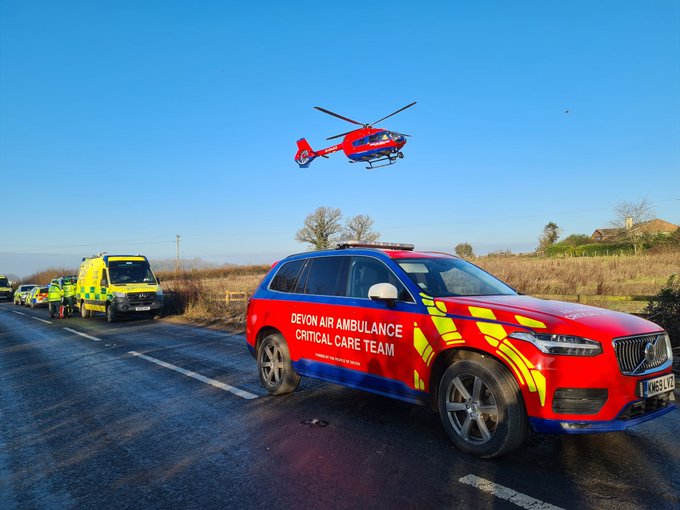
DAA aircraft and critical care car at scene

Analysis: women more frequently trapped in car accidents

By Clinical

Largest analysis of trapped patients injured in motor vehicle collisions reveals important differences in relation to age and gender, as well as higher mortality rates

A series of studies conducted by consultants at University Hospitals Plymouth NHS Trust have revealed that not only are patients who become trapped when involved in a car accident more likely to die, but that there are also significant differences in injuries sustained according to age and sex.

Motor vehicle collisions (MVCs) are the second most common cause of major trauma in the UK. Worldwide, they are a significant cause of morbidity and mortality, accounting for 1.35 million deaths per annum. Patients who remain within their vehicle following an incident and cannot leave without assistance are considered to be ‘trapped’.

Devon Air Ambulance’ Tim Nutbeam reports

Professor Tim Nutbeam, Emergency Medicine Consultant, has authored a series of papers in collaboration with colleagues across a number of organisations*, on studies utilising the Trauma Audit Research Network (TARN) database, thanks to funding received by the Road Safety Trust. These studies are the largest analysis to-date of trapped patients injured in MVCs, which has allowed comparison of injury severity, injury type and outcomes for patients, stratified by age and gender. The studies have also allowed, for the first time, the identification and comparison of differences between men and women in terms of injury patterns and the likelihood of becoming trapped after a collision.

According to the results of the first paper, patients who are trapped after a MVC have a higher severity of injuries and are more likely to die than those who are not trapped. Of the 63,625 cases studied, nearly 11% of patients were trapped in their vehicles after an accident. Trapped patients often had significant blood loss and were more likely to have time-critical injuries. However, spinal cord injuries proved to be rare, only affecting 0.7% of all extrications.

For years, the approach to handling patients following a MVC has been the principle of movement minimisation and mitigation, to prevent secondary spinal injury,” explains Tim, who is also an Honorary Professor at the University of Plymouth and lead doctor with the Devon Air Ambulance. “But this method is time-consuming, and patients may have time-critical injuries. When considering the frequency, type and severity of injuries reported here, the benefit of movement minimisation may be outweighed by the additional time taken for extrication. In other words, it could prove to be harmful for the other 99.3% of patients, who do not have a spinal injury, to spend unnecessary time trapped in their car.

The second paper published by Tim and his colleagues demonstrates that older patients are more likely to become trapped in their cars, and in particular, those aged over 80 are more likely to die if trapped. Although chest and spinal injuries are more common in older patients (with head, abdominal and limb injuries more common in younger patients), the overall rate of spinal injuries for all age groups remains low, providing evidence that minimising entrapment time could help to reduce mortality and improve patient outcomes.

Why women are more frequently trapped

In the final paper of this initial series, the results show that although men are more likely to be involved in serious crashes and admitted to hospital, women were more frequently trapped in their cars (16% of women vs 9% of men). Potential reasons for this include that women are more likely to sit closer to the steering wheel, increasing the likelihood of becoming trapped. Female patients are also biologically prone to certain types of injury – for instance, women have different pelvic anatomy which may make them more susceptible to pelvic injuries, which may trap them in their vehicles.

The paper also makes the case that the safety features incorporated in modern cars are less likely to be effective for women. Current mandatory crash testing uses a scaled down male mannequin to represent females and are not modelled to account for anthropometric differences between men and women. Safety systems are therefore likely to be more effective for men than for women.

We are hopeful that the findings in these papers will strengthen demands for more biologically accurate crash test dummies to investigate impact collisions on women,’ adds Tim. ‘In particular, the sex-disaggregated data may help vehicle manufacturers, road safety organisations and emergency services to tailor responses with the aim of equitable outcomes by targeting equal performance of safety measures and reducing excessive risk to one sex or gender. Most importantly, we hope our work will help to save lives.

Tim and his colleagues will shortly be publishing further research looking into the extrication techniques for people trapped after MVCs. This work has also been funded by the Road Safety Trust, who are dedicated to achieving zero deaths and serious injuries on UK roads.

*Organisations include: Betsi Cadwaladr University, GENDRO, Geneva Graduate Institute, Somerset NHS Foundation Trust, University of Cape Town and University of Manchester.