Clinical8

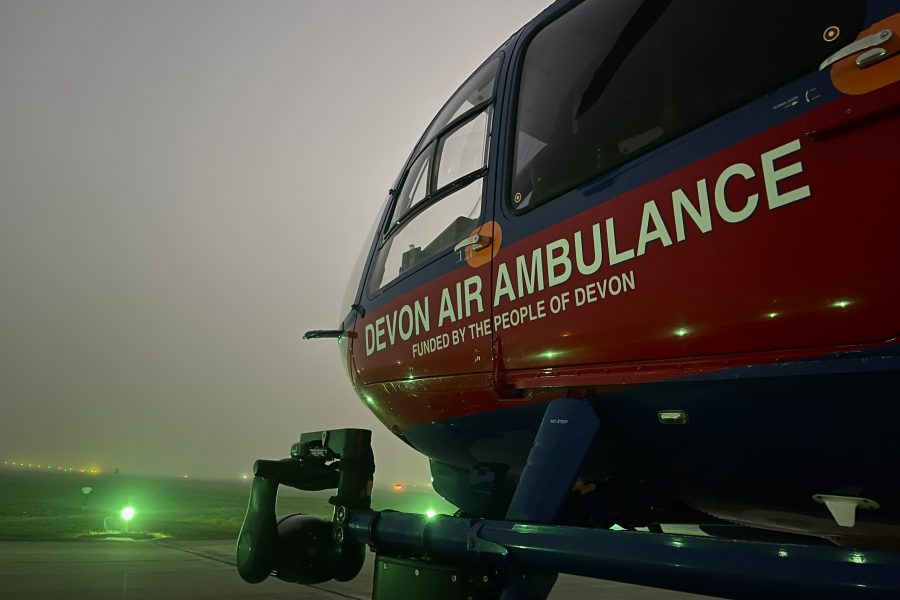
Helicopter in the fog

New rapid transfer service for stroke patients

By Clinical, Operations, Uncategorized

Strokes are the second most common cause of death worldwide.  85% of strokes are caused by a blockage (a clot called a thrombus) in the small blood vessels of the brain, and the remaining 15% occur as a result of a bleed in the brain. Administering emergency clot-busting drugs has been the mainstay treatment for many years but risks further complications. Developments in treating these thrombolytic strokes continue to improve not only survival, but the quality of life for those that do survive.

Some thrombolytic strokes are now treated using a relatively new procedure, similar to that used in the treatment of heart attacks. Removal of the thrombus is undertaken with a guide wire inserted into a large artery in the leg, which travels along blood vessels to reach the target, and the thrombus is removed. This procedure is called Mechanical Thrombectomy Retrieval (MTR) and is performed by specialist Neuro Interventional Radiologists at Plymouth hospital, using x-ray type images to help them carefully navigate the complex network of blood vessels in the brain. The aim is to remove the thrombus, so that normal blood flow can be restored to the part of the brain which has been starved of oxygen.

Results for MTR are impressive. In some cases, patients can have severe one-sided paralysis at the start of the procedure and wake up afterwards moving all four limbs normally. Patients suffering this kind of sudden stroke are time critical, and MTR should be performed as quickly as possible as the benefit of MTR drops by 5.7% for every hour of delay. In Devon, the longest transfer time to Plymouth hospital is undertaken by patients being treated at Barnstaple hospital. Between the two hospitals, the road transfers can take up to two hours, but by air, it is only twenty minutes.

Anaesthetist, Anna Ferguson, first approached Devon Air Ambulance with the idea of reducing this transfer time. In partnership with Plymouth and Barnstaple hospitals, Critical Care Paramedic, Nigel Lang, from Devon Air Ambulance, worked with Anna to develop the system which now provides rapid air transfer for these time critical emergencies.

So far, six patients have benefited from this new service, and it is anticipated that numbers will increase as the MTR service expands. MTR is not yet a 24/7 service, however it is hoped this will be achieved within the next few years. MTR is an expensive procedure, however due to reduced hospital stay and social care needs, cost savings can be huge; and the benefit to patients and their families can be even bigger.

The main stroke symptoms can be remembered using the word FAST:

Face – their face, mouth, or an eye may droop on one side, and the person may not be able to smile.

Arms – the person may not be able to lift both arms and keep them there.

Speech – speech may be slurred or garbled; they may not be able to talk; and may have problems understanding what you’re saying.

Time – dial 999 immediately.

Visit the NHS page

About Nigel Lang: Nigel has been with DAA for since 2009, and an operational Advanced Paramedic in Critical Care, as well as the Research Lead Paramedic.

How to identify a stroke infographic

How to identify a stroke infographic

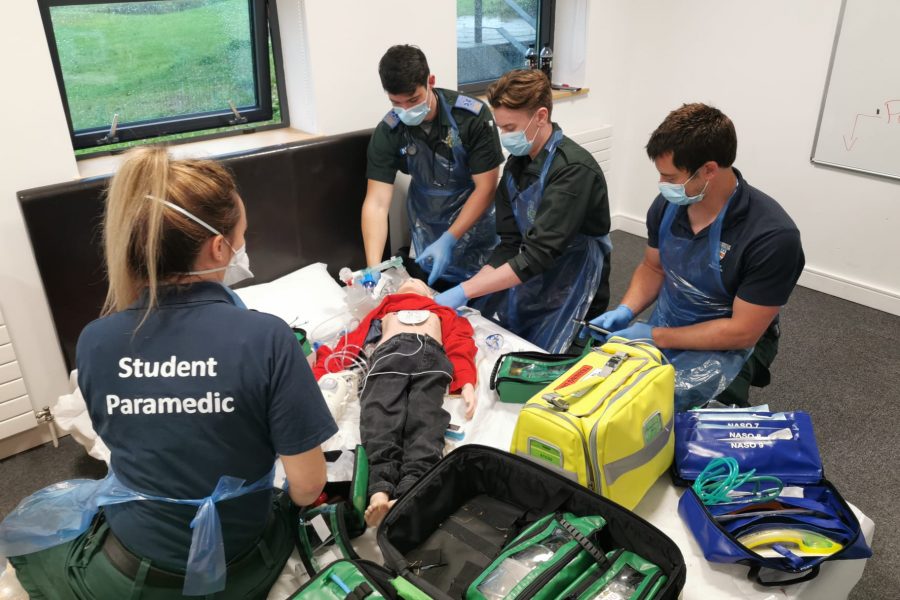
HEMS simulation day

College of paramedics: a paramedic’s insight

By Clinical

Amy-Leigh Shepherd, ParaSoc Chair, shares her insights into a HEMS Simulation Day

Student Paramedic Societies, or ‘ParaSocs’, have a vitally important role in helping to build the confidence and competence of future paramedics. On the 2nd of October 2021, our Paramedic Society (ParaSoc) at Plymouth University co-hosted a simulation training day with Devon Air Ambulance Trust (DAAT). This event had 29 student members attend, working alongside five Critical Care Paramedics, six live actors and a makeup artist to help make the event as realistic as possible.

Before the event, a pre-reading list was available to members, allowing them to familiarise themselves with current guidelines to help maximise learning on the day. The ParaSoc team worked heavily with Joshua Barker from DAAT to create the following scenarios:

  • Post-ROSC following ALS
  • Crush Injury Trauma
  • Major Trauma
  • Paediatric Life-threatening Asthma
  • Traumatic Brain Injury with a Pre-Hospital Emergency Anaesthesia Demonstration

Creating realism within the five scenarios allowed us to challenge our student members, encourage shared decision-making, and highlight the importance of good communication and teamwork within a high-pressured environment. Bringing the simulation to life involved a special effects makeup artist creating realistic injuries such as an open femur fracture and packable wounds using silicone prosthetics.

Additionally, makeup created an impression of diaphoresis, cyanosis, and bruising.

The actors were volunteer first year paramedic students who were briefed on how to act surrounding their presenting complaint and when to deteriorate or improve based on clinical interventions. It provided beneficial insight into the profession for the first years and enhanced the authenticity of the simulation for our ParaSoc members.

Clothes were donated for each scenario to encourage students to remove patients’ clothing as they would during traumatic incidents in front-line placements. ParaSoc supplied the volunteers with red clothing to wear underneath their outfits to simulate “skin level”. All participants were instructed to stop cutting clothes when they saw the red undergarments. By physically performing the task, our members felt more comfortable removing clothing in practice and searching for injuries that may be hidden by clothing. Feedback after the event highlighted that this was a beneficial aspect of the day because students felt removing clothing is often overlooked during simulation with a mannequin but is a necessity when conducting a thorough head to toe assessment in the pre-hospital environment.

The five groups rotated through the stations throughout the day, spending 40 minutes in simulation followed by a 20 minute debrief session. Spending an hour on each station allowed our members to embrace the simulation and practice interventions in real-time. An example of this is when administering medication; students used the plastic catheter of the cannula (with the needle disposed of) and attached it to the patient’s skin with a Tegaderm. They would then break open and draw up a placebo medication, often a glass ampoule containing water, or sweetener in a bottle for hydrocortisone. Administering the medication correctly instead of mimicking the procedure added to the realism as we all know how time-consuming and fiddly that can be in a crowded and loud environment!

Each scenario had a different approach to creating a challenging environment to emphasise the importance of good communication in a time-critical situation. The crush injury trauma was based in a dark man-made cave, where the patient had been trapped by a boulder made of cardboard and expanding foam. Each group had split themselves up to form two crews, and each responding group had one torch. Furthermore, a speaker played loud white noise to mimic the sound of the fire service stabilising the rock face, highlighting the importance of good communication and teamwork within a difficult working location. Establishing good holistic care became important in the paediatric life-threatening asthma scenario where students had to manage a frightful mother and a deteriorating patient. All these scenarios were gratefully received by all who attended, who stated it was a challenging but fantastic learning day.

Upon reflection, while the many benefits of this event outweigh the challenges we faced on the day, it is worthy to note that we would reduce the number of scenarios to help prevent fatigue for future events. Nevertheless, the length of each simulation felt realistic to front line placement and the 20 minute debrief afterwards was essential to solidifying learning and clarifying any questions. Our HEMS collaboration day has highlighted how we can get innovative with our ParaSoc CPD events to create a fun learning environment for our fellow students, to help increase their confidence through simulation. We hope that by sharing our experiences of running this event, we can inspire other ParaSocs to create and share their own!

This event would not have been possible without the help of the following people, so a massive thank you again:

  • DAAT Critical Care Paramedics (Joshua Barker, Lee Hilton, Glenn Birtwistle, Neil Spencer and Mark Hawley)
  • ParaSoc Committee (Nathan Evans; Paul Cook and Cara Clemow)
  • Special Effects Makeup Artist (Poppy Shepheard)
  • Live Actors + NQP (Shannon Murphy; Sophie Wills; Steve Griffiths; Katy Hope; Emily Carey; Adele Hontoir and Ashley Bowers)

Read the article in the context of the College of paramedics publication

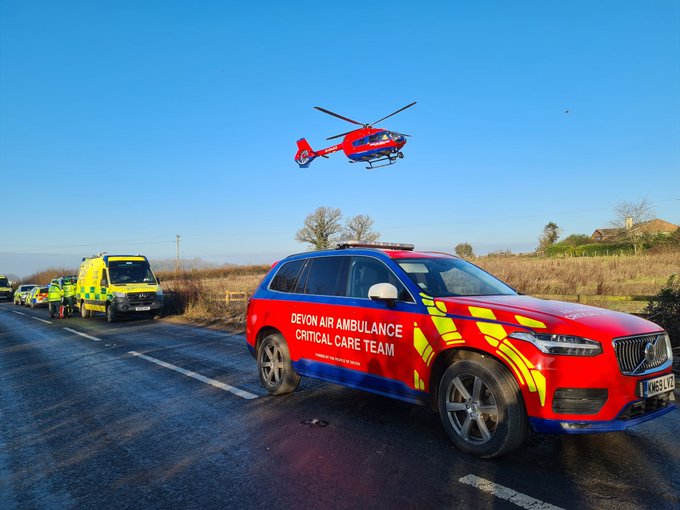
DAA aircraft and critical care car at scene

Analysis: women more frequently trapped in car accidents

By Clinical

Largest analysis of trapped patients injured in motor vehicle collisions reveals important differences in relation to age and gender, as well as higher mortality rates

A series of studies conducted by consultants at University Hospitals Plymouth NHS Trust have revealed that not only are patients who become trapped when involved in a car accident more likely to die, but that there are also significant differences in injuries sustained according to age and sex.

Motor vehicle collisions (MVCs) are the second most common cause of major trauma in the UK. Worldwide, they are a significant cause of morbidity and mortality, accounting for 1.35 million deaths per annum. Patients who remain within their vehicle following an incident and cannot leave without assistance are considered to be ‘trapped’.

Devon Air Ambulance’ Tim Nutbeam reports

Professor Tim Nutbeam, Emergency Medicine Consultant, has authored a series of papers in collaboration with colleagues across a number of organisations*, on studies utilising the Trauma Audit Research Network (TARN) database, thanks to funding received by the Road Safety Trust. These studies are the largest analysis to-date of trapped patients injured in MVCs, which has allowed comparison of injury severity, injury type and outcomes for patients, stratified by age and gender. The studies have also allowed, for the first time, the identification and comparison of differences between men and women in terms of injury patterns and the likelihood of becoming trapped after a collision.

According to the results of the first paper, patients who are trapped after a MVC have a higher severity of injuries and are more likely to die than those who are not trapped. Of the 63,625 cases studied, nearly 11% of patients were trapped in their vehicles after an accident. Trapped patients often had significant blood loss and were more likely to have time-critical injuries. However, spinal cord injuries proved to be rare, only affecting 0.7% of all extrications.

For years, the approach to handling patients following a MVC has been the principle of movement minimisation and mitigation, to prevent secondary spinal injury,” explains Tim, who is also an Honorary Professor at the University of Plymouth and lead doctor with the Devon Air Ambulance. “But this method is time-consuming, and patients may have time-critical injuries. When considering the frequency, type and severity of injuries reported here, the benefit of movement minimisation may be outweighed by the additional time taken for extrication. In other words, it could prove to be harmful for the other 99.3% of patients, who do not have a spinal injury, to spend unnecessary time trapped in their car.

The second paper published by Tim and his colleagues demonstrates that older patients are more likely to become trapped in their cars, and in particular, those aged over 80 are more likely to die if trapped. Although chest and spinal injuries are more common in older patients (with head, abdominal and limb injuries more common in younger patients), the overall rate of spinal injuries for all age groups remains low, providing evidence that minimising entrapment time could help to reduce mortality and improve patient outcomes.

Why women are more frequently trapped

In the final paper of this initial series, the results show that although men are more likely to be involved in serious crashes and admitted to hospital, women were more frequently trapped in their cars (16% of women vs 9% of men). Potential reasons for this include that women are more likely to sit closer to the steering wheel, increasing the likelihood of becoming trapped. Female patients are also biologically prone to certain types of injury – for instance, women have different pelvic anatomy which may make them more susceptible to pelvic injuries, which may trap them in their vehicles.

The paper also makes the case that the safety features incorporated in modern cars are less likely to be effective for women. Current mandatory crash testing uses a scaled down male mannequin to represent females and are not modelled to account for anthropometric differences between men and women. Safety systems are therefore likely to be more effective for men than for women.

We are hopeful that the findings in these papers will strengthen demands for more biologically accurate crash test dummies to investigate impact collisions on women,’ adds Tim. ‘In particular, the sex-disaggregated data may help vehicle manufacturers, road safety organisations and emergency services to tailor responses with the aim of equitable outcomes by targeting equal performance of safety measures and reducing excessive risk to one sex or gender. Most importantly, we hope our work will help to save lives.

Tim and his colleagues will shortly be publishing further research looking into the extrication techniques for people trapped after MVCs. This work has also been funded by the Road Safety Trust, who are dedicated to achieving zero deaths and serious injuries on UK roads.

*Organisations include: Betsi Cadwaladr University, GENDRO, Geneva Graduate Institute, Somerset NHS Foundation Trust, University of Cape Town and University of Manchester.

H145 aircraft at Exeter Airbase

Injured women half as likely as men to be treated with life-saving drug

By Clinical

New study highlights urgent need to improve equity in trauma care.

Injured women are half as likely as men to receive the life-saving drug tranexamic acid (TXA) even though the treatment is equally effective regardless of sex, according to new research in the British Journal of Anaesthesia.

The study was conducted by a team from the London School of Hygiene & Tropical Medicine and University Hospitals Plymouth NHS Trust, which included Critical Care Doctors Tim Nutbeam and Lauren Weekes. Devon Air Ambulance clinicians often collaborate with many others in the field, which is beneficial not only to the broader clinical community, but also to the collective knowledge and awareness of the crew, ultimately supporting patients.

In this two-part investigation, the team initially re-analysed data from two large randomised trials involving over 20,000 adult trauma victims, whose original findings showed that TXA can save the lives of tens of thousands of accident victims worldwide. They found the drug is equally effective in male and female patients and reduces the risk of death by up to 30%.

They next looked at data from 216,000 injured patients included on the Trauma Audit Research Network (TARN) database for England and Wales to see if injured women were being treated to the same extent. The researchers found that compared with men, injured women were half as likely to get TXA, both in and outside of the hospital setting. The discrepancy in treatment occurred even where women have the same risk of death from bleeding as men. The gap in administration was greatest in older patients and those with a lower risk of death from blood loss.

Professor Ian Roberts from the London School of Hygiene & Tropical Medicine and study author, said:

“These results are very concerning. TXA is the only proven lifesaving treatment for traumatic bleeding. Women were treated less frequently than men regardless of their risk of death from bleeding or the severity of their injuries. This looks like sex discrimination, and there is an urgent need to reduce this disparity in TXA treatment so all patients who need the drug have the chance to receive it.”

Tranexamic acid is a safe and established treatment for bleeding. Current UK guidance for its administration states it should be given where there is “known or suspected severe traumatic haemorrhage” and the injury has occurred within the previous three hours. It is also administered to patients with certain types of head injury.

Professor Tim Nutbeam from University Hospitals Plymouth NHS Trust and study author, said:

“These results are striking but sadly not surprising. It is already known that women with chest pain are less likely to receive aspirin, less likely to be resuscitated for out of hospital cardiac arrest, and less likely to be taken to hospital by an ambulance using lights and sirens.

“Although we have shown large sex differences in TXA treatment, we can only speculate about the underlying causes. Clinicians in the UK must be provided with clearer treatment guidance so that we can help reduce this bias. If all patients were treated according to need, we could save 160 lives per year in the UK.”

Dr Lauren Weekes from University Hospitals Plymouth NHS Trust and study author, said:

“There is a vast data gap in the medical literature when it comes to health outcomes for women. By sex-disaggregating data from the CRASH trials and the TARN database our study has contributed to a body of knowledge concerning women’s health. The next step is to work towards redressing the inequitable administration of this lifesaving medication.”

The authors acknowledge limitations of the study include missing data for some of the variables used to calculate the risk of death due to bleeding, although the percentage of missing data was similar for men and women. There is also potential for inaccuracy in predictions of the risk of death from bleeding, despite studies showing the method used has high reliability.

The next steps are for further research to establish awareness of this specific issue in critical care and encourage other analysis of gender/sex bias in access to and delivery of health care to ensure evidence-based delivery of treatments, and that policies and triage tools do not discriminate. It will also be necessary to investigate the specific bias.

Darren Goodwin, Operations Manager at Devon Air Ambulance said:

“We very much value the work clinicians like Tim and Lauren undertake in partnership with University Hospitals Plymouth NHS Trust. An important aspect of our work as clinicians is to drive change and innovation in the sector, not only at a local level, but globally and for the benefit of all patients. We always seek to enhance our culture of learning, training, and the sharing of insights that ultimately influence practice and help to save more lives.”

three of our volunteer responders

Paramedics donate free time to save lives

By Clinical, Operations

Helicopter Emergency Medical Service (HEMS) dispatchers can now draw upon support of Devon Air Ambulance’s Volunteer Responder Scheme 

three of our volunteer responders

Josh, Lee and Darren, Specialist Paramedics in Critical Care who are volunteering on the scheme

Devon Air Ambulance Advanced Paramedics in Critical Care not only dedicate their work to bringing advanced care to patients in time-critical situations, but they are now donating their own free time to the cause too. 

The Devon Air Ambulance Volunteer Responder Scheme (VRS) is a new initiative where three of Devon Air Ambulance’s Specialist and Advanced Paramedics in Critical Care are volunteering to support core emergency services across Devon.  

These three emergency responders are about to begin a twelve-month trial to determine the feasibility of introducing a permanent volunteer responder team within the organisation.  

This means that HEMS dispatchers can now draw upon off-duty highly skilled clinicians to be the first responders in an emergency situation that they are close to. 

Enhancing the first response network

Devon is already fortunate enough to have a dedicated network of volunteer emergency doctors who are part of BASICS Devon.  

Like Devon Air Ambulance, BASICS is also a charity that receives no Government funding and relies solely on donations. The BASICS doctors provide immediate access to specialist medical care. They also respond in their own vehicles, anytime, anywhere in Devon and all have undertaken extensive specialist training in the complex and challenging arena of pre-hospital medical care.

Simon Scott-Hayward, Chair of Trustees at BASICS Devon said:  

We’re extremely happy that Devon Air Ambulance has been able to launch their own Volunteer Responder Scheme, this ultimately means that an additional specialist, emergency medical team is ready to respond to the critically-ill or injured across Devon when every second counts. In the past year we have seen an increased demand for our service of 30% so have no doubt that DAA’s volunteer responders will also be kept very busy.

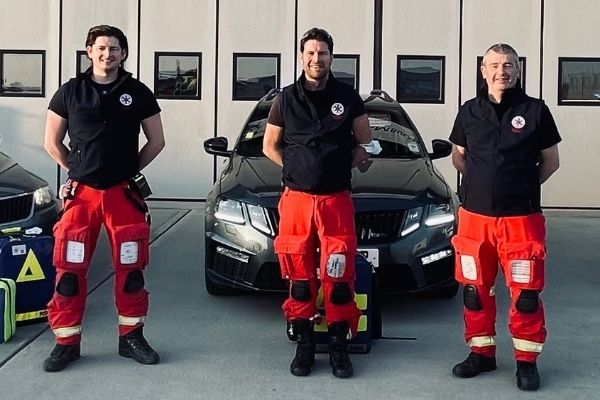
3 volunteer responders with kit and car

Our 3 volunteer crew members with their vehicles

Who are the Volunteer Responders?

Lee Hilton, Darren Goodwin & Josh Barker will attend emergency calls outside of their normal working hours on a completely voluntary basis. They will work closely with Devon Air Ambulance clinicians, South Western Ambulance Service NHS Foundation Trust (SWASFT) colleagues, and other volunteer doctors from the British Association for Immediate Care (BASICS) if they are also attending the incident.  

What can the VRS team deliver?

The team of VRS responders are either qualified Specialist or Advanced Paramedics in Critical Care and will be able to deliver their full scope of practice as they do in their employed role which includes, but is not limited to, advanced airway management, sedation, advanced trauma care procedures and support with complex clinical decision making. The team will support existing enhanced and critical care service in delivering the best available care to our patients in their time of need.   

How will the VRS team respond?

VRS responders will each notify the Helicopter Emergency Medical Service (HEMS) Dispatchers based in the SWASFT control room when they are available to volunteer, which means they could then be contacted by HEMS to respond to an emergency incident in the same way as they currently dispatch the fleet of Devon Air Ambulance’s other emergency vehicles.  

The difference will be that the VRS team will use their own vehicles to respond. This requires the responder to gain appropriate insurance for the purposes of emergency responding, together with ensuring their vehicles are fully serviceable and fit for the purpose of their intended use. Each volunteer responder also needs to be equipped with much of the same lifesaving equipment carried on their usual critical care cars and helicopters. In addition, volunteers need to be able to reach the scene safely and this requires the use of blue lights and sirens.   

How much does it cost?

It costs approximately £5,500 to fully equip one of our volunteers with everything they need. Devon Air Ambulance supporters have enabled the charity to fund this kit. Devon Air Ambulance is one of just a few air ambulances to launch a scheme of this type and plan to report on the life-saving difference they will make to local communities in Devon. 

How do I learn more about the VRS trial?

A detailed service evaluation will run concurrently alongside the trial phase to ensure all important data is captured to maximise the success of the scheme. Headline facts and mission figures will be shared on the daatcl.co.uk website in due course.

We know you will join us in wishing Lee, Darren and Josh well, as they embark on a trial which will further enhance the provision of time-critical care across Devon.

Read more about the scheme 

Devon Air Ambulance VRS car identification

Look out for this logo in our volunteer vehicles

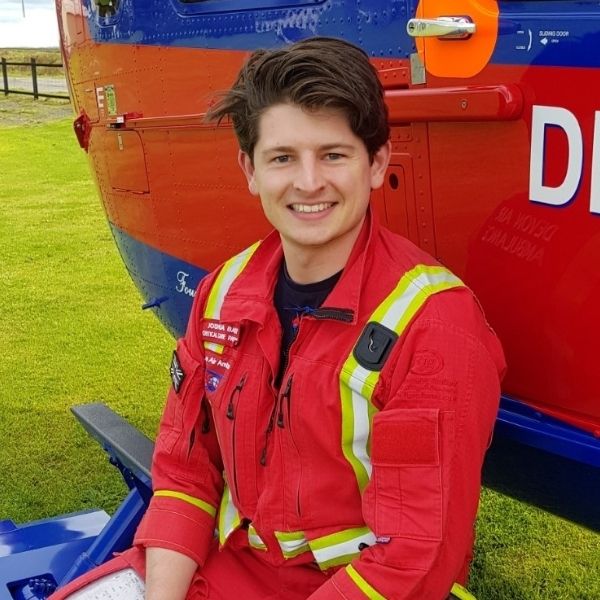
Critical Care Paramedic Josh Barker

Becoming a Critical Care Paramedic

By Clinical, Patient Support

Specialist Paramedic in Critical Care, Josh Barker, shares his experience of qualifying to be a paramedic and the study and training involved in becoming established in the role.

I feel incredibly lucky and thankful to be working for a Critical Care and HEMS service, as it is one of the most competitive and sought-after job positions in prehospital medicine, among paramedics and doctors alike. The role of Specialist Paramedic in Critical Care with Devon Air Ambulance is a position I feel very fortunate to have achieved.

How do you become a Critical Care Paramedic?

My journey began before ever having thought about stepping inside a helicopter. My colleagues and I began our careers working for frontline ambulance services attending 999 calls.

Some colleagues worked in roles of Care Assistant and Technician before qualifying as a Paramedic. Others, like me, worked as direct-entry graduate paramedics having completed a degree at university.

What’s required next is to consolidate the qualification with experience, working on the road to develop our practice, clinical acumen and confidence in managing a variety of sick and injured patients. Most air ambulances ask for a minimum of 3 -5 years of post-registration experience before you can be considered for interview.

Preparing for a HEMS application

In addition to the development of clinical skills through working as a paramedic, and the continued professional development that is required in this role, HEMS applicants are expected to demonstrate additional experience to help them stand out.

In becoming a specialist practitioner, it’s helpful if candidates can display how they meet the 4 Pillars of Advanced Practice: Clinical Excellence, Education, Leadership and Research.

Therefore, having some clinical teaching experience or mentorship is useful, as well as taking part in quality improvement projects or research.

Most of these opportunities are available whilst working in the ambulance service, but it will probably require some additional hours invested, volunteering your time to get a variety of experience.

Working for a charity

Finally, it’s important to recognise that often, in the UK, working for a HEMS unit means working for a charity.

This adds a further dimension to your role as a Critical Care Paramedic, in that it is important to help the charity achieve its aims and to support fundraising. Without the support of local communities, air ambulance charities couldn’t function; it is important that the clinical crew understand this.

Many of us donate some of our time to the charity to attend functions or county shows where there may be a charity or fundraising stall. We engage with the charity’s supporters and volunteers to help demonstrate where their donations go.

As we are the ones delivering the front-line patient care, our presence is valuable to the charity as we are best-placed to explain why critical care is so important and exactly how the air ambulance can make a difference.

Most services will want to know that their applicants will embrace this ethos, so charity and volunteer experience can go a long way to demonstrate this on your CV.

Training to be a Specialist Paramedic in Critical Care (SPCC)

The learning curve to be a SPCC is quite dramatic. In addition to learning to become a critical care provider, HEMS paramedics generally also have an additional role as a Helicopter Emergency Medical Service Technical Crewmember (HTC). This is a recognised aviation role and so we come under some of the regulations that govern pilots and other flight crew.

Training comprises a 3-week programme covering aviation principles and legislation, basic understanding of the systems on board the helicopter, refuelling, navigation, meteorology and various other subjects that allow us to contribute to the safe operation of the aircraft. We then must hone these skills in practice as part of the operational crew assisting with HEMS site selection, night flying and radio communications.

Education designed by Devon Air Ambulance

I am currently (May 2021) two thirds of the way through a 3-year Master’s programme that has been designed by Devon Air Ambulance to cover the advanced training and education requirements that are part of becoming an SPCC.

This course covers subjects from: advanced diagnostic reasoning, anaesthetic and ventilation principles, critical care medicine, as well as research and critical analysis modules. This is a key part of training to be a SPCC, but it’s also combined with daily simulation on-base, reflection on every case we attend, and in-depth governance sessions where the team learns from each other’s experiences. Although I’m almost at the end of my formal training, the learning never stops as the pathologies we encounter are so diverse and our clinical skill set is constantly adjusting.

It’s certainly a long journey to becoming a Specialist Paramedic in Critical Care, but it is definitely worth it as the role is incredibly rewarding.

Josh is very happy to respond to questions on his experience and to expand on his discussion here. Contact him at: j.barker@daat.org

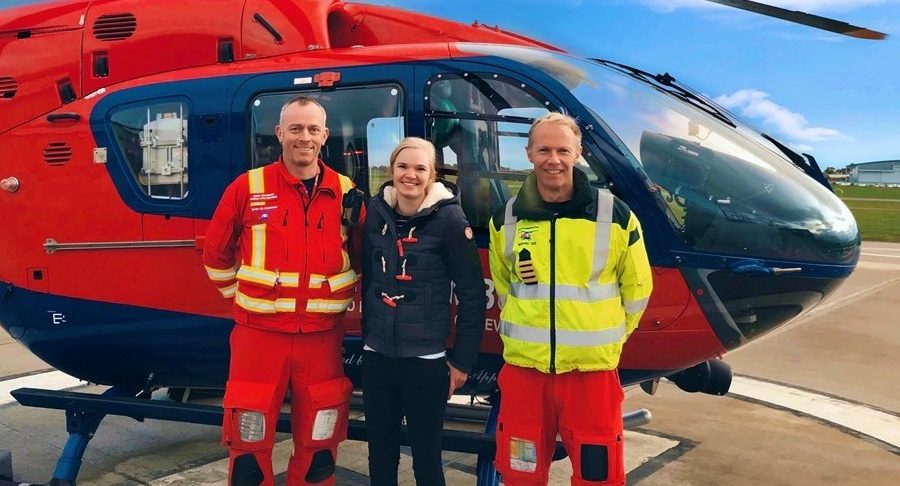
Patient, Beth, besides helicopter with the crew

This World Patient Safety Day Devon Air Ambulance celebrates exemplary service

By Clinical, Patient Support
Devon Air Ambulance is proud to join with the World Health Organisation on 17 September, 2020 for the first World Patient Safety Day.
The overall objective of the Day is to enhance the understanding of patient safety, increase public engagement in the safety of health care, enhance patient safety and reduce patient harm; firmly grounded in the fundamental of ‘Medicine – first, do no harm’.
However, Patient Safety isn’t something that we promote on a single day; it sits at the heart of everything that we do every day. From those delivering care to our patients, to those essential ‘behind the scenes’ members of the team, a lot of hard work goes into ensuring our service is not only safe, but the welfare of our patients and staff are at the forefront of everything we do.
As an Independent Healthcare Provider registered with the Care Quality Commission, we actively support patient safety in a variety of ways. After each incident we respond to, the team is encouraged to reflect on the care they delivered. Unusual or challenging incidents, or those where the needs of the patient required advanced invention and treatment, are discussed at our monthly Clinical Governance days. Here as a team we reflect on the care we provided, consider what we could do to further improve the experiences of our patients, and ultimately seek to provide them with an even greater chance of a successful outcome. We also review the care we provided against national Quality Indicators as well as those we have established ourselves that we believe challenge us to provide the very best care to patients.

Learning opportunities

Our ‘Just Culture’ supports clinicians, pilots and support staff to report incidents where something didn’t go well and we actively encourage our team to highlight ‘Near Misses’, where strong processes, the timely intervention of another clinician, or simply due to good fortune, an incident that could have led to harm was avoided. Open reporting of Incidents and Near Misses provides the opportunity to learn and help prevent future occurrences and helps us identify the areas where we can reduce risk to our patients and staff. This insight helps inform the training and simulation sessions we deliver during our Clinical Governance days and during our daily sessions at the airbases.
However, an important aspect of patient safety is understanding the perspective of our patients. Devon Air Ambulance employs three Patient Liaison Clinicians who contact our patients following their incident and offer ongoing support to them and/or their family. Where the patient is happy to share their experience with us, we seek to understand how our service treated them from their perspective. With the patient’s consent, we share their experience with not just the clinical team who treated them, but with our wider team so everyone can learn from the experience of our patients, even if they didn’t care for them personally. Where possible and the patient has given their permission, we also share this learning with other health care professionals who we worked alongside when treating the patient.
The valuable insight from our patients helps us not only to keep our future patients safe, but in what can often be very traumatic circumstances, helps us to ensure our patients ‘feel’ safe. Our experience has shown us that patients often have ongoing needs even once they have been discharged from hospital. We have a network of charities and other agencies who provide short term and long-term support during recovery and rehabilitation and we can introduce our patients to them, further supporting their recovery and wellbeing. As patients embark on their recovery and rehabilitation, they may have financial challenges or need legal advice to support them with any changed circumstance they may find themselves in. We are able to provide details of specialist organisations that can support our patients in these areas, helping to keep them safe in a broader context.

Patient welfare foremost

Sometimes, our patients have gaps in their recollection of the care we provided, or have questions about the treatment we provided, just as patient Beth said:
“I had no recollection of being airlifted or of the crew that attended, so when I was discharged from hospital, I wrote to them to thank them for helping save my life. A few days later, I was contacted by a member of the team who’d seen my message. She was incredibly supportive and empathic about my amnesia around the helicopter and offered me the chance to come and meet the crew and see the helicopter. This offer meant the world to me and my recovery as it would give me the chance to see the people who saved my life and find out what had happened to me.
“The team from Devon Air Ambulance not only saved my life that day, they were there for me afterwards. They were so understanding of how traumatic not just my incident was, but the trauma that came from being airlifted itself. Something I’d never have been able to fully process without the patient liaison team supporting me through.”
Identifying the care needs of our patients and what is required to keep them safe sits at the heart of our decision making. From encouraging open reporting, identifying and addressing risks, learning from our patients’ experience, keeping up to date with the latest research and evidence and our commitment to regular education, training and simulation, will help assure our supporters and the hundreds of patients we treat each year, that Devon Air Ambulance is passionate about keeping our patients safe.