Uncategorized2

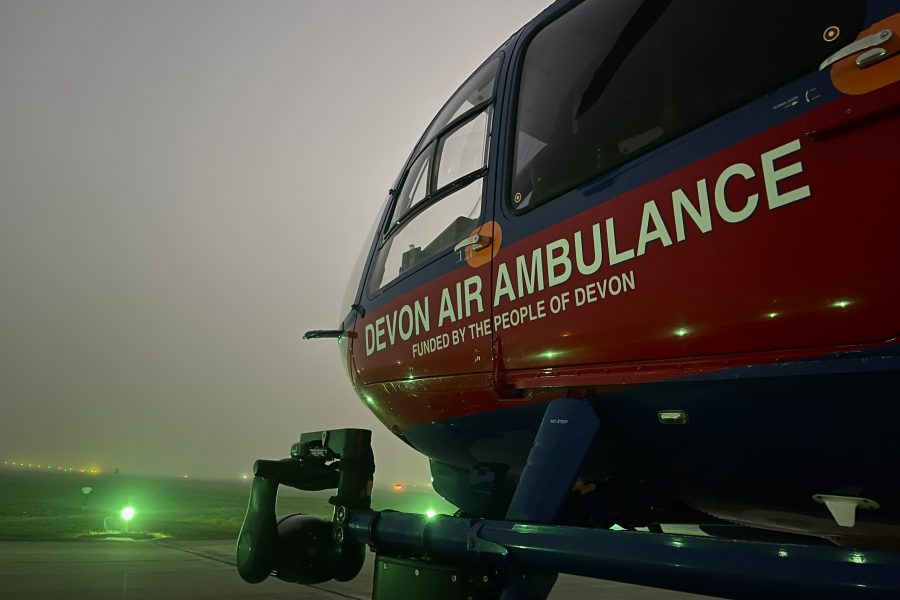
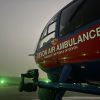
Helicopter in the fog

New rapid transfer service for stroke patients

By Clinical, Operations, Uncategorized

Strokes are the second most common cause of death worldwide.  85% of strokes are caused by a blockage (a clot called a thrombus) in the small blood vessels of the brain, and the remaining 15% occur as a result of a bleed in the brain. Administering emergency clot-busting drugs has been the mainstay treatment for many years but risks further complications. Developments in treating these thrombolytic strokes continue to improve not only survival, but the quality of life for those that do survive.

Some thrombolytic strokes are now treated using a relatively new procedure, similar to that used in the treatment of heart attacks. Removal of the thrombus is undertaken with a guide wire inserted into a large artery in the leg, which travels along blood vessels to reach the target, and the thrombus is removed. This procedure is called Mechanical Thrombectomy Retrieval (MTR) and is performed by specialist Neuro Interventional Radiologists at Plymouth hospital, using x-ray type images to help them carefully navigate the complex network of blood vessels in the brain. The aim is to remove the thrombus, so that normal blood flow can be restored to the part of the brain which has been starved of oxygen.

Results for MTR are impressive. In some cases, patients can have severe one-sided paralysis at the start of the procedure and wake up afterwards moving all four limbs normally. Patients suffering this kind of sudden stroke are time critical, and MTR should be performed as quickly as possible as the benefit of MTR drops by 5.7% for every hour of delay. In Devon, the longest transfer time to Plymouth hospital is undertaken by patients being treated at Barnstaple hospital. Between the two hospitals, the road transfers can take up to two hours, but by air, it is only twenty minutes.

Anaesthetist, Anna Ferguson, first approached Devon Air Ambulance with the idea of reducing this transfer time. In partnership with Plymouth and Barnstaple hospitals, Critical Care Paramedic, Nigel Lang, from Devon Air Ambulance, worked with Anna to develop the system which now provides rapid air transfer for these time critical emergencies.

So far, six patients have benefited from this new service, and it is anticipated that numbers will increase as the MTR service expands. MTR is not yet a 24/7 service, however it is hoped this will be achieved within the next few years. MTR is an expensive procedure, however due to reduced hospital stay and social care needs, cost savings can be huge; and the benefit to patients and their families can be even bigger.

The main stroke symptoms can be remembered using the word FAST:

Face – their face, mouth, or an eye may droop on one side, and the person may not be able to smile.

Arms – the person may not be able to lift both arms and keep them there.

Speech – speech may be slurred or garbled; they may not be able to talk; and may have problems understanding what you’re saying.

Time – dial 999 immediately.

Visit the NHS page

About Nigel Lang: Nigel has been with DAA for since 2009, and an operational Advanced Paramedic in Critical Care, as well as the Research Lead Paramedic.

How to identify a stroke infographic

How to identify a stroke infographic

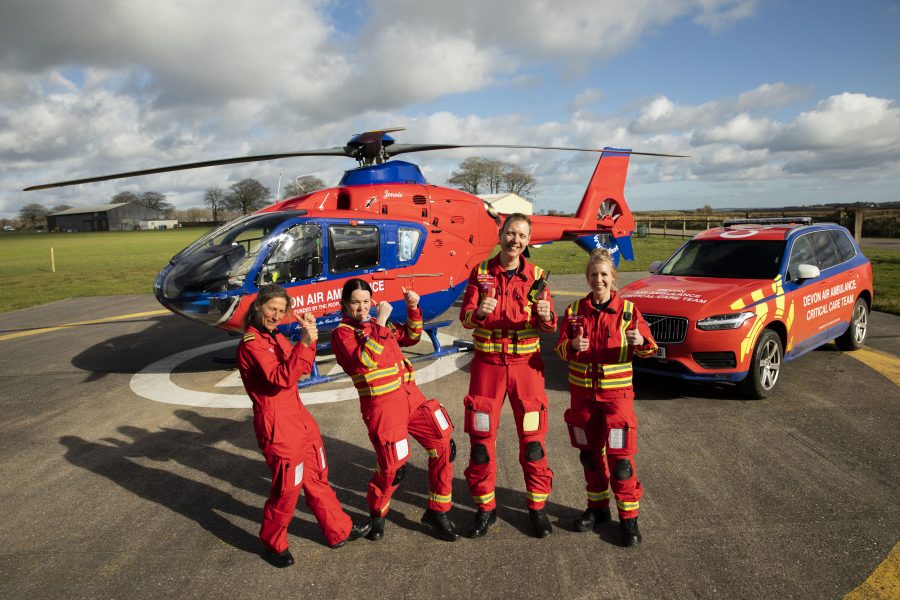
Crew assembled wit aircraft and critical care car

An ‘Outstanding’ reason to celebrate for Devon Air Ambulance

By Uncategorized

Devon Air Ambulance Trading Company Limited has been rated ‘Outstanding’ following an inspection by the Care Quality Commission (CQC) in June this year.

The CQC is the independent regulator of health and social care in England, ensuring safe, effective, compassionate, high quality care services to patients. By monitoring, inspecting and regulating services across all healthcare organisations, the CQC ensures organisations like Devon Air Ambulance meet the fundamental standards of quality and safety.

In 2019, the operational part of Devon Air Ambulance, the Devon Air Ambulance Trading Company Limited, registered with the CQC and became clinically independent. The Devon Air Ambulance Trading Company’s aim is to develop clinical excellence by constantly raising the bar of their emergency medical service provision to patients through excellence in training and developing clinical expertise, to directly benefit each of their patients.

Due to the pandemic, until recently the CQC have not been able to conduct on-site inspections, but in June this year, they undertook their first ‘Comprehensive’ Inspection of Devon Air Ambulance since their registration 3 years earlier.

The Process

The Care Quality Commission states: ‘There are five questions we ask all care services.  They’re at the heart of the way we regulate, and they help us to make sure we focus on the things that matter to people.’

Five Key Questions

  • Are they safe?  Are patients protected from abuse and avoidable harm?
  • Are they effective? Does the care, treatment and support given, achieve good outcomes, help to maintain quality of life, based on best available evidence?
  • Are they caring? Do the staff involve and treat patients with compassion, kindness, dignity and respect?
  • Are they responsive to people’s needs? Is the organisation organised to meet their patient’s needs?
  • Are they well-led? The leadership, management and governance of the organisation need to make sure it is providing high quality care based around the patient’s individual needs, that they encourage innovation, and that they promote an open and fair culture.

How the Five questions are used within the inspection

Each of the five key questions are broken down into ‘key lines of enquiry’. These help the CQC to decide what to focus on. For example, the inspection team might look at how risks are identified and managed, in order to help them understand whether a service is safe.  This ensures consistency and focuses on the areas that matter most.

An ‘Outstanding’ rating

Following the inspection, Devon Air Ambulance’s service was rated Outstanding overall and specifically for Caring, Responsive, Effective and being Well Led.

Part of the report summary states:

‘During our inspection we spoke with 10 patients and their families. Feedback was consistently positive and complimentary about the service and the care and support they received. All patients and families described the service in exceptional terms and said things such as ‘couldn’t have done more’, that the service was quick to respond and that handover to hospital staff and follow up by the service after the patient had been admitted to hospital was ‘very much appreciated’.

Helena Holt, Chief Executive Officer at Devon Air Ambulance said:

All our people are wholeheartedly committed to providing the best possible care for our patients so I am delighted that this report confirms our belief that we have an outstanding team delivering an outstanding life-saving service to the people of Devon.  I cannot thank them enough.

Celebrate an outstanding inspection result

Nigel Hare, Operations Director at Devon Air Ambulance stated:

‘It is important that we recognise and celebrate the success of our ‘outstanding’ rating across the whole organisation.  Over the past few years, it has taken hard work, and sometimes difficult decisions in an unprecedented, challenging environment. So, it is extra special that the commitment and culmination of all the hard work from all our staff and the desire to provide the very best service to our patients has been recognised by the CQC as Outstanding.

‘To make all this possible, our service requires essential funding and it is thanks to the kind and generous support of the people of Devon, plus our fantastic team, that we are proud to be celebrating such a brilliant result today, so let us congratulate them all with a huge thanks to our ‘outstanding’ supporters, our ‘outstanding’ organisation and our ‘outstanding’ staff and volunteers too.’

Read the full report on Devon Air Ambulance’s recent inspection by the CQC