Patient Support4

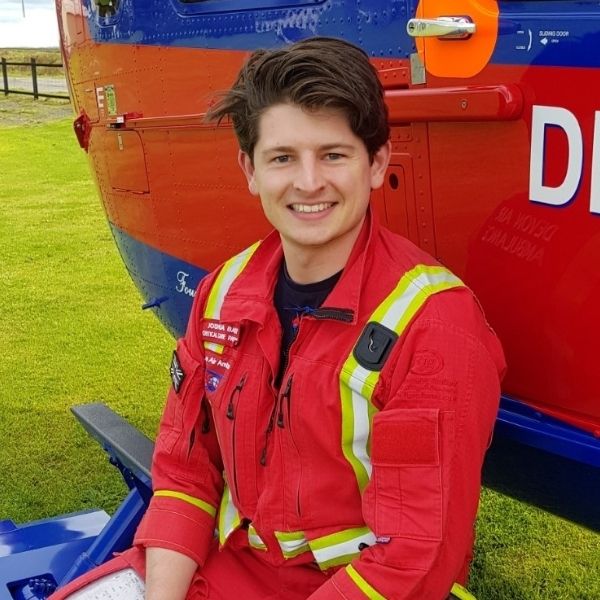
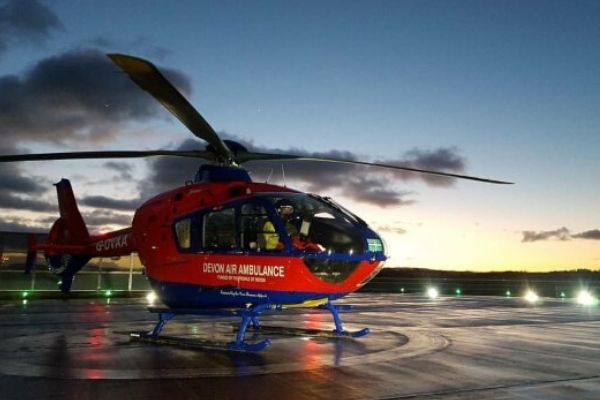
Critical Care Paramedic Josh Barker

Becoming a Critical Care Paramedic

By Clinical, Patient Support

Specialist Paramedic in Critical Care, Josh Barker, shares his experience of qualifying to be a paramedic and the study and training involved in becoming established in the role.

I feel incredibly lucky and thankful to be working for a Critical Care and HEMS service, as it is one of the most competitive and sought-after job positions in prehospital medicine, among paramedics and doctors alike. The role of Specialist Paramedic in Critical Care with Devon Air Ambulance is a position I feel very fortunate to have achieved.

How do you become a Critical Care Paramedic?

My journey began before ever having thought about stepping inside a helicopter. My colleagues and I began our careers working for frontline ambulance services attending 999 calls.

Some colleagues worked in roles of Care Assistant and Technician before qualifying as a Paramedic. Others, like me, worked as direct-entry graduate paramedics having completed a degree at university.

What’s required next is to consolidate the qualification with experience, working on the road to develop our practice, clinical acumen and confidence in managing a variety of sick and injured patients. Most air ambulances ask for a minimum of 3 -5 years of post-registration experience before you can be considered for interview.

Preparing for a HEMS application

In addition to the development of clinical skills through working as a paramedic, and the continued professional development that is required in this role, HEMS applicants are expected to demonstrate additional experience to help them stand out.

In becoming a specialist practitioner, it’s helpful if candidates can display how they meet the 4 Pillars of Advanced Practice: Clinical Excellence, Education, Leadership and Research.

Therefore, having some clinical teaching experience or mentorship is useful, as well as taking part in quality improvement projects or research.

Most of these opportunities are available whilst working in the ambulance service, but it will probably require some additional hours invested, volunteering your time to get a variety of experience.

Working for a charity

Finally, it’s important to recognise that often, in the UK, working for a HEMS unit means working for a charity.

This adds a further dimension to your role as a Critical Care Paramedic, in that it is important to help the charity achieve its aims and to support fundraising. Without the support of local communities, air ambulance charities couldn’t function; it is important that the clinical crew understand this.

Many of us donate some of our time to the charity to attend functions or county shows where there may be a charity or fundraising stall. We engage with the charity’s supporters and volunteers to help demonstrate where their donations go.

As we are the ones delivering the front-line patient care, our presence is valuable to the charity as we are best-placed to explain why critical care is so important and exactly how the air ambulance can make a difference.

Most services will want to know that their applicants will embrace this ethos, so charity and volunteer experience can go a long way to demonstrate this on your CV.

Training to be a Specialist Paramedic in Critical Care (SPCC)

The learning curve to be a SPCC is quite dramatic. In addition to learning to become a critical care provider, HEMS paramedics generally also have an additional role as a Helicopter Emergency Medical Service Technical Crewmember (HTC). This is a recognised aviation role and so we come under some of the regulations that govern pilots and other flight crew.

Training comprises a 3-week programme covering aviation principles and legislation, basic understanding of the systems on board the helicopter, refuelling, navigation, meteorology and various other subjects that allow us to contribute to the safe operation of the aircraft. We then must hone these skills in practice as part of the operational crew assisting with HEMS site selection, night flying and radio communications.

Education designed by Devon Air Ambulance

I am currently (May 2021) two thirds of the way through a 3-year Master’s programme that has been designed by Devon Air Ambulance to cover the advanced training and education requirements that are part of becoming an SPCC.

This course covers subjects from: advanced diagnostic reasoning, anaesthetic and ventilation principles, critical care medicine, as well as research and critical analysis modules. This is a key part of training to be a SPCC, but it’s also combined with daily simulation on-base, reflection on every case we attend, and in-depth governance sessions where the team learns from each other’s experiences. Although I’m almost at the end of my formal training, the learning never stops as the pathologies we encounter are so diverse and our clinical skill set is constantly adjusting.

It’s certainly a long journey to becoming a Specialist Paramedic in Critical Care, but it is definitely worth it as the role is incredibly rewarding.

Josh is very happy to respond to questions on his experience and to expand on his discussion here. Contact him at: j.barker@daat.org

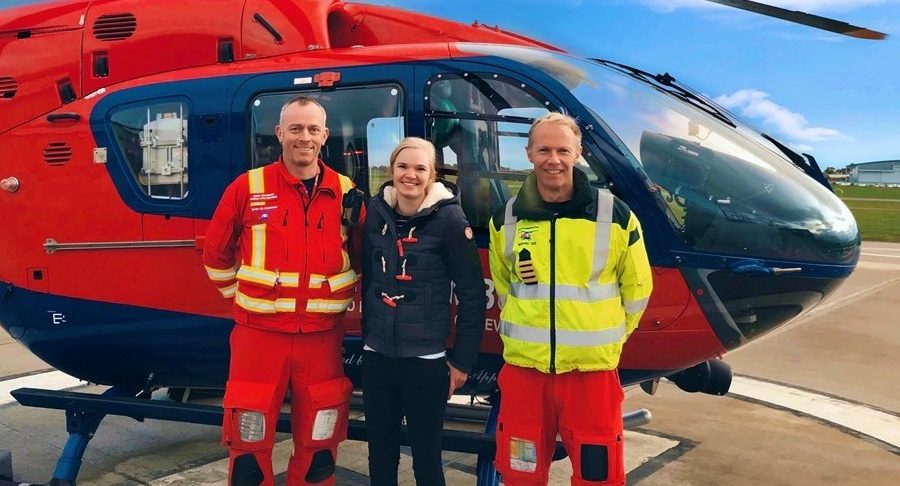
Patient, Beth, besides helicopter with the crew

This World Patient Safety Day Devon Air Ambulance celebrates exemplary service

By Clinical, Patient Support
Devon Air Ambulance is proud to join with the World Health Organisation on 17 September, 2020 for the first World Patient Safety Day.
The overall objective of the Day is to enhance the understanding of patient safety, increase public engagement in the safety of health care, enhance patient safety and reduce patient harm; firmly grounded in the fundamental of ‘Medicine – first, do no harm’.
However, Patient Safety isn’t something that we promote on a single day; it sits at the heart of everything that we do every day. From those delivering care to our patients, to those essential ‘behind the scenes’ members of the team, a lot of hard work goes into ensuring our service is not only safe, but the welfare of our patients and staff are at the forefront of everything we do.
As an Independent Healthcare Provider registered with the Care Quality Commission, we actively support patient safety in a variety of ways. After each incident we respond to, the team is encouraged to reflect on the care they delivered. Unusual or challenging incidents, or those where the needs of the patient required advanced invention and treatment, are discussed at our monthly Clinical Governance days. Here as a team we reflect on the care we provided, consider what we could do to further improve the experiences of our patients, and ultimately seek to provide them with an even greater chance of a successful outcome. We also review the care we provided against national Quality Indicators as well as those we have established ourselves that we believe challenge us to provide the very best care to patients.

Learning opportunities

Our ‘Just Culture’ supports clinicians, pilots and support staff to report incidents where something didn’t go well and we actively encourage our team to highlight ‘Near Misses’, where strong processes, the timely intervention of another clinician, or simply due to good fortune, an incident that could have led to harm was avoided. Open reporting of Incidents and Near Misses provides the opportunity to learn and help prevent future occurrences and helps us identify the areas where we can reduce risk to our patients and staff. This insight helps inform the training and simulation sessions we deliver during our Clinical Governance days and during our daily sessions at the airbases.
However, an important aspect of patient safety is understanding the perspective of our patients. Devon Air Ambulance employs three Patient Liaison Clinicians who contact our patients following their incident and offer ongoing support to them and/or their family. Where the patient is happy to share their experience with us, we seek to understand how our service treated them from their perspective. With the patient’s consent, we share their experience with not just the clinical team who treated them, but with our wider team so everyone can learn from the experience of our patients, even if they didn’t care for them personally. Where possible and the patient has given their permission, we also share this learning with other health care professionals who we worked alongside when treating the patient.
The valuable insight from our patients helps us not only to keep our future patients safe, but in what can often be very traumatic circumstances, helps us to ensure our patients ‘feel’ safe. Our experience has shown us that patients often have ongoing needs even once they have been discharged from hospital. We have a network of charities and other agencies who provide short term and long-term support during recovery and rehabilitation and we can introduce our patients to them, further supporting their recovery and wellbeing. As patients embark on their recovery and rehabilitation, they may have financial challenges or need legal advice to support them with any changed circumstance they may find themselves in. We are able to provide details of specialist organisations that can support our patients in these areas, helping to keep them safe in a broader context.

Patient welfare foremost

Sometimes, our patients have gaps in their recollection of the care we provided, or have questions about the treatment we provided, just as patient Beth said:
“I had no recollection of being airlifted or of the crew that attended, so when I was discharged from hospital, I wrote to them to thank them for helping save my life. A few days later, I was contacted by a member of the team who’d seen my message. She was incredibly supportive and empathic about my amnesia around the helicopter and offered me the chance to come and meet the crew and see the helicopter. This offer meant the world to me and my recovery as it would give me the chance to see the people who saved my life and find out what had happened to me.
“The team from Devon Air Ambulance not only saved my life that day, they were there for me afterwards. They were so understanding of how traumatic not just my incident was, but the trauma that came from being airlifted itself. Something I’d never have been able to fully process without the patient liaison team supporting me through.”
Identifying the care needs of our patients and what is required to keep them safe sits at the heart of our decision making. From encouraging open reporting, identifying and addressing risks, learning from our patients’ experience, keeping up to date with the latest research and evidence and our commitment to regular education, training and simulation, will help assure our supporters and the hundreds of patients we treat each year, that Devon Air Ambulance is passionate about keeping our patients safe.

About our Patient Liaison Clinicians

By Patient Support

DAATCL’s Patient Liaison Clinicians (PLC) are Kate Adlam, Adrian Parker and Paul Robinson. The role of the PLC is to provide support to the patients and families of those that have been attended by our aircrew paramedics and doctors, whether they have been airlifted, ground assisted (with our paramedics and doctors travelling in the road ambulance) or treated on scene. This is a purely patient focused supporting role where the welfare of our patients is paramount.

We are attempting to contact every patient DAA have attended, this can either be by letter, telephone or by visiting the patients in the hospital or their own home after being discharged from hospital. Some patients we are unable to contact as we may not have been able to gain their details at the time of their accident or illness, for example if they were not conscious and not with friends or family. By talking to our patients, we can gain an insight into their view of the care we provided at scene and the issues they encounter after their ordeal and during their recovery. We can use this information to help support them wherever possible and help us shape and develop the future care and treatment we provide.

We have a large database of charities that we have identified as suitable for the type of patients we attend; we are in regular contact with these charities and have helped signpost many of our patients to them for further advice and support. We are also able to refer patients and their families to a legal team who work with us to support our patients through these difficult times. They can help by providing a free and comprehensive legal service to the patients of Devon Air Ambulance, giving support when independent legal assistance is most needed, helping with financial issues, welfare benefits, housing and employment issues to name but a few.